
Replacing Your Roof and Siding Together: When Bundling Exterior Projects Saves Money and Stress
When both your shingles and wall cladding are nearing the end of their service life, you face a major financial crossroads. You have to decide whether to tackle them one at a time or bundle them into a single coordinated renovation. Solving a multi-stage home renovation puzzle can sometimes feel like navigating an intricate escape room where every move affects the next step. This is especially true when weather windows, contractor schedules, and household budgets all have to align before winter sets in. Taking a step back to look at how roof and siding replacements interact reveals why combining both projects makes so much sense. Doing them together often delivers cleaner craftsmanship, meaningful cost efficiencies, and far less disruption to daily life.
Across Canada, short construction seasons and unpredictable spring and autumn storms demand tight project timelines. Because of this, exterior contractors frequently see homeowners regret splitting closely related upgrades across separate years. Knowing when bundling makes financial and structural sense—and how the right sequence protects your home—makes all the difference. With that clarity, you can plan an exterior transformation with total confidence.
Where Bundling Exterior Projects Actually Saves Money
At first glance, paying for a roof replacement and a siding overhaul in the same season requires a larger upfront budget. Spacing them three or four years apart might seem easier on your wallet right now. Yet when you examine line-item renovation expenses closely, separating the two projects almost always costs more in total. Every major exterior job carries fixed mobilization overhead. That includes delivery trucks with boom cranes, waste disposal bins, safety scaffolding, protective tarping for landscaping, and site cleanup hours. Running those logistics once instead of twice immediately trims redundant fees.
Labour efficiency improves just as noticeably when one coordinated crew or exterior contractor manages the full building envelope. Carpenters and installers do not have to carefully pry back brand-new siding panels to slip step flashing behind them. At the same time, roofers do not have to work cautiously around fragile, freshly painted trim. Crews move systematically from top to bottom, avoiding double-handling materials. This streamlined approach also prevents accidental scuffs or ladder dents on recently completed surfaces.
Why Simultaneous Installation Creates Stronger Weatherproofing
Beyond budget efficiencies, the strongest technical argument for bundling roof and siding upgrades lies at the junctions where horizontal roof planes meet vertical walls. Spots like dormer cheeks, split-level transitions, garage rooflines, and covered front porches are especially vulnerable to the elements. These areas rely on precision-layered step flashing, kick-out diverters, and weather-resistive housewrap to keep wind-driven rain and melting snow outside your framing.
When a roof is replaced years before the siding, roofers must work around old, brittle cladding that often cracks if lifted. This forces compromises in how high new flashing can extend up the wall. Conversely, replacing siding while an aging roof remains in place creates a different guessing game. Installers have to estimate how future roofing layers will eventually sit along the eaves and valleys. Completing both projects together eliminates those trade-offs. Crews can strip old layers down to clean sheathing, repair any hidden rot, and lap housewrap directly over freshly installed metal step flashing. From there, they integrate drip edges, soffits, fascia, and eavestroughs as one airtight, water-shedding system.
Coordinating Materials and Colours for Maximum Curb Appeal
Exterior design trends have evolved dramatically over the past decade, moving away from mismatched patchworks toward cohesive, architecturally balanced palettes. Choosing your roof and siding at the same time lets you view physical material samples side by side in natural daylight rather than trying to match a new cladding colour to an existing faded roof years later.
Homeowners upgrading to architectural metal roofing in matte charcoal, slate gray, or deep bronze, for example, can pair those sleek standing-seam lines directly with crisp board-and-batten siding, warm cedar-look soffits, and matching seamless gutters. Coordinating undertones across shingles or metal panels, wall cladding, window trim, and front entry doors prevents clashing hues and transforms an aging facade into a cohesive modern exterior—an upgrade that consistently ranks among the highest-return renovations in Canadian real estate appraisals.
Understanding the Ideal Sequence and Project Timeline
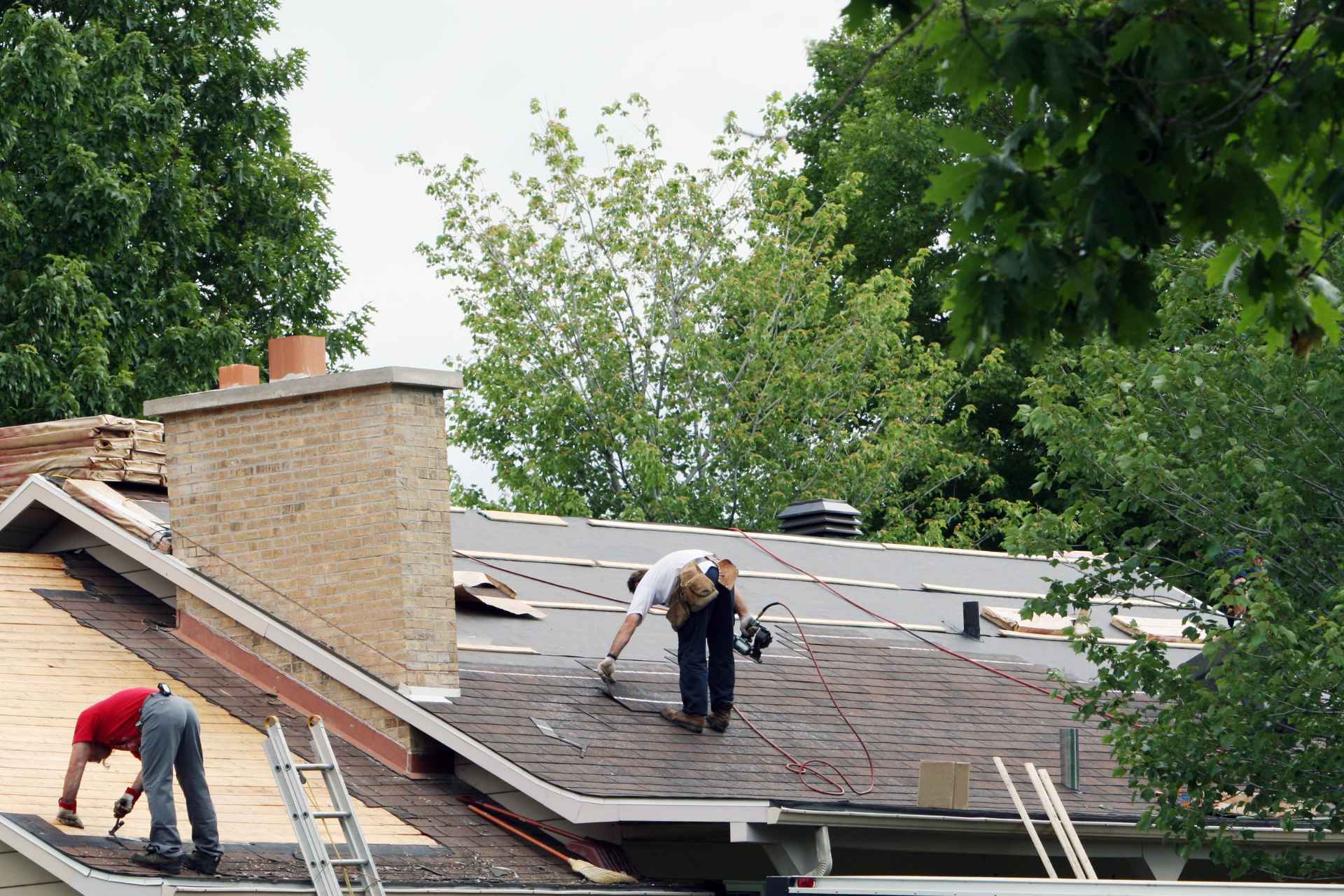
Even when booked under a single contract, roof and siding replacements follow a clear, logical construction order. This sequence is designed to protect newly finished surfaces from falling debris. Almost universally, crews start at the top by completing the roof tear-off, deck inspection, and underlayment installation. They then place the shingles or metal panels before moving downward. Starting at the peak keeps heavy bundles, nails, and old roofing debris from ever falling onto brand-new siding below.
Once the roof is watertight and upper flashings are set, teams transition smoothly to the walls. They strip the old cladding, inspect the wall sheathing, and upgrade the exterior rigid foam insulation and house wrap. From there, installers put up the new siding, corner posts, and trim boards. Seamless eavestroughs and downspouts typically go up last so they mount cleanly onto fresh fascia boards without taking ladder bumps during siding work. For an average detached home, bundling both phases generally adds only one to two weeks onto a standalone roofing schedule. That means you condense months of staggered renovation noise into a single, well-managed stretch.
When Spacing Projects Apart Still Makes Sense
Bundling is not automatically the right call for every household. Suppose your roof was replaced within the last five to seven years and still has decades of healthy life remaining. Tearing off sound shingles simply to match new siding would waste valuable material equity. Similarly, an unexpected hailstorm or wind event might require an immediate roof replacement before your renovation savings are ready for full cladding. In those emergencies, protecting the roof structure right away always takes top priority.
In those situations, the smartest move is simply telling your contractor that a siding upgrade is planned within the next few years. A thoughtful crew can plan ahead by installing generous step flashing and leaving proper clearance along lower roof-to-wall transitions. They can also document material colour codes so your future siding project integrates smoothly when the time comes.
Preparing Your Budget and Choosing the Right Exterior Partner
Take a close look at your exterior for clear signs of age, such as curling shingles, granule loss, cracked panels, drafty walls, or peeling roofline trim. If both surfaces are wearing down, request a bundled quote alongside separate individual quotes so you have transparent numbers to compare. Look for an experienced exterior contractor who is licensed and insured for both roofing and cladding. Make sure they are backed by strong local references and clear workmanship warranties covering transition flashings. Tackling your home’s outer shell in one coordinated step spares your family years of repeat construction disruption. At the same time, it wraps your home in durable, worry-free protection for decades ahead.
